
Restoration of premium instruments
A premium grand piano is built to last for generations. At the Chris Maene Workshop, Steinway grand pianos and other valuable instruments are completely disassembled, technically rebuilt and refined down to the smallest detail. In this way, each instrument regains its original sound, touch and appearance, ready for a new musical life. Discover step by step how we approach this process.
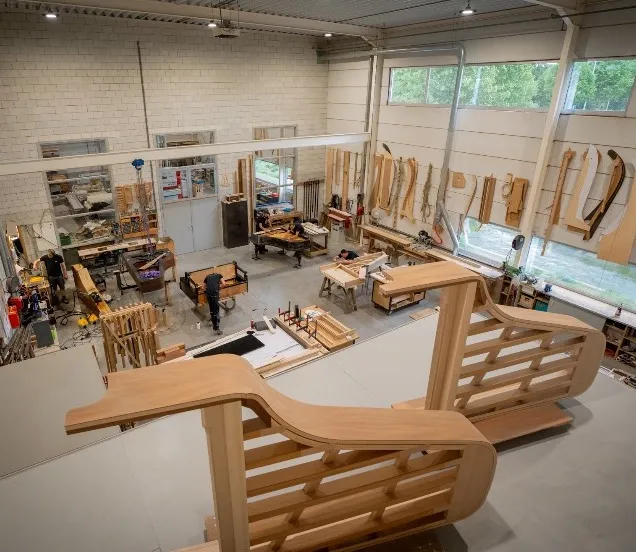
A top-quality instrument deserves a second life
A high-quality grand piano is built to last for generations. Nevertheless, decades of intensive use, ageing and fluctuations in temperature and humidity eventually leave their mark: the tuning becomes less stable, the action loses precision, and the sound loses power and tonal richness.
During a complete restoration, the grand piano is thoroughly examined, disassembled and rebuilt. Worn components are restored or replaced, with respect for the original construction and musical character of the instrument.
Piano’s Maene fully restores Steinway grand pianos and other premium instruments in its own Chris Maene Atelier. Our specialists work together to return each instrument to premium condition. For Steinway restorations, we use genuine parts, and our technicians regularly attend training courses at Steinway & Sons in Hamburg.
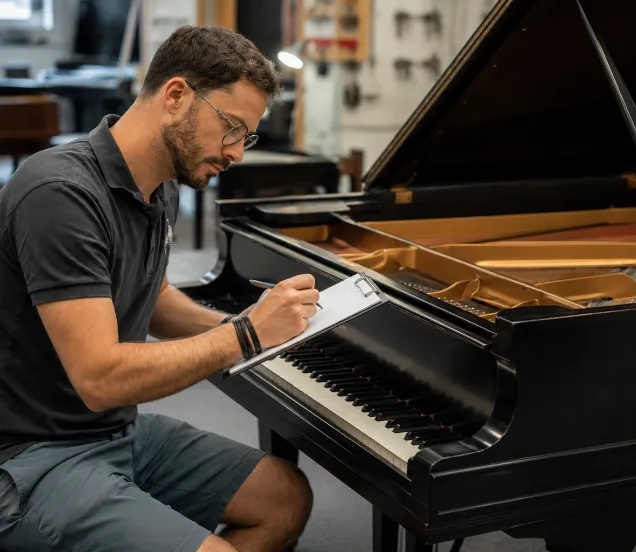
1. Thorough assessment and restoration plan
Every restoration begins with a thorough technical and musical analysis. We examine not only what is worn or damaged, but also which qualities of the instrument should be preserved.
Our experts inspect the case, soundboard, bridges, tuning pins, strings, keyboard, action, dampers and pedals, among other components. The cabinet, veneer, fittings and historical details are also carefully assessed.
The grand piano is also played and tested extensively. We evaluate the touch, tonal development, balance between the registers, sustain, clarity and dynamics.
Based on these findings, we draw up an individual restoration plan. Wherever possible, components are preserved and restored, or replaced when necessary to ensure stability, sound quality and precision of touch.
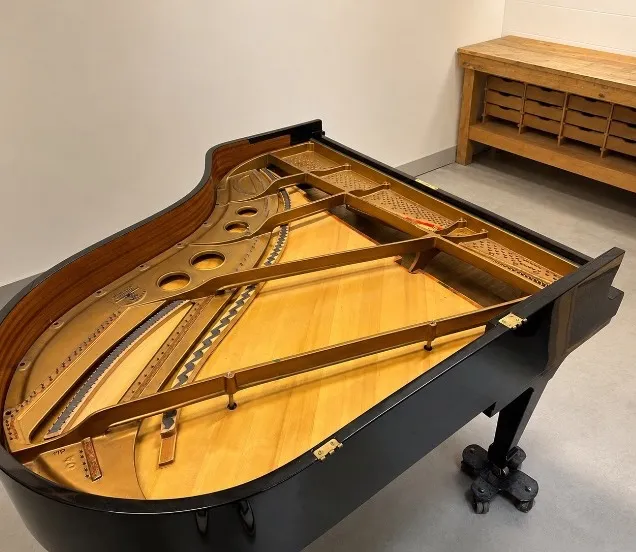
2. Documentation and complete disassembly
Before work begins, the original condition is carefully documented. Dimensions, materials, construction details, serial numbers, inscriptions and settings are recorded and photographed. This is an especially important step for older or historically valuable instruments.
The grand piano is then completely disassembled. The keyboard, action, dampers, strings, tuning pins and cast-iron frame are removed, together with the pedal system and the various cabinet components.
Only once the instrument has been fully opened can the actual condition of its structural and acoustic construction be accurately assessed. Hidden cracks, loose joints, deformations and previous repairs then become clearly visible.
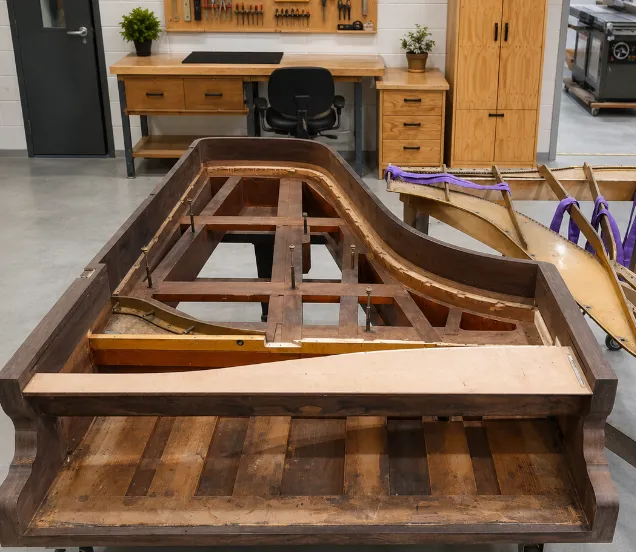
3. The load-bearing structure
The wooden case and inner rim form the solid foundation of the grand piano. Together with the bracing structure and the cast-iron frame, they must withstand the enormous tension exerted by the strings for many years.
All glued joints, braces, connections and load-bearing components are inspected. Loose joints are reglued, and damaged wooden sections are expertly restored. Dimensional accuracy is crucial: even minor deviations can later affect the position of the soundboard, frame, strings and action.
The aim is not simply to make an old instrument more rigid, but to restore its original structural integrity. A stable case provides the essential foundation that allows the soundboard to function freely and in a controlled manner.
4. The soundboard: the acoustic heart
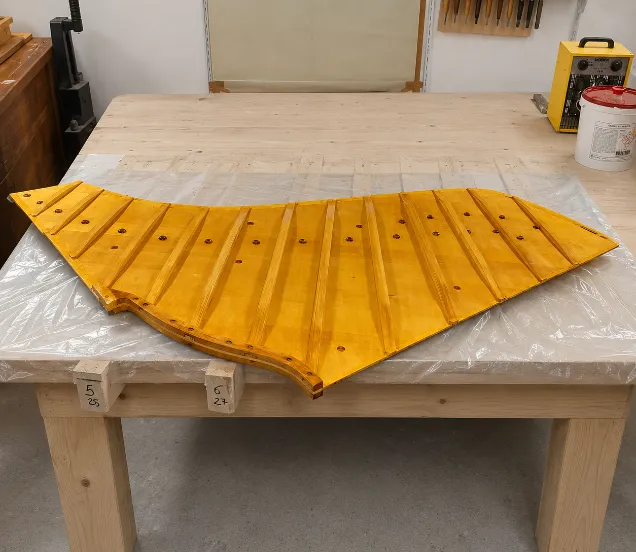
When the original soundboard can be preserved, the instrument is first placed in a controlled drying room at Piano’s Maene. Thanks to carefully regulated temperature and humidity, the wood gradually releases moisture and any existing cracks become fully visible.
At the same time, our specialists inspect the connections between the soundboard and the ribs, as loose sections can cause vibrations and unwanted noises. The cracks are cleaned and, where necessary, prepared as narrow V-shaped grooves, into which matching strips of selected spruce are glued.
After the glue has cured, the excess wood is removed by hand and the surface is finished smoothly. The soundboard is then allowed to stabilise again in the normal workshop climate, so that the soundboard and ribs can once more vibrate as a single acoustic unit. A new soundboard is fitted only when the crown, stability or tension cannot be restored reliably.
5. Bridges and pinblock
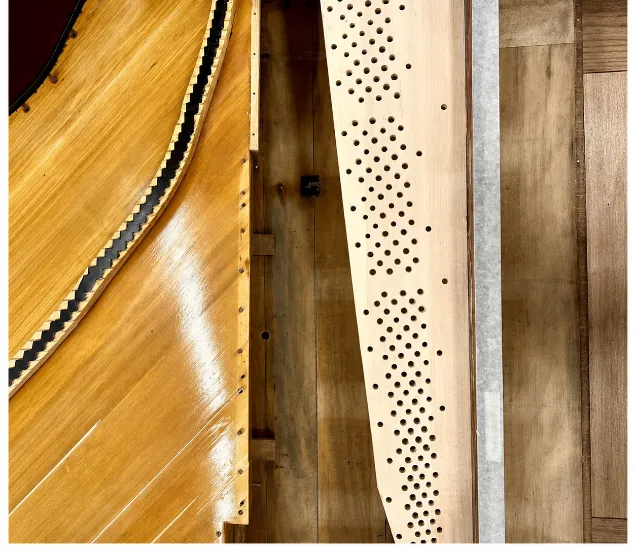
The bridges connect the strings to the soundboard and transmit their vibrations. Cracks around the bridge pins, wear or imprecise contact with the strings can reduce clarity, purity of tone and energy transmission.
The bridges are therefore thoroughly inspected and restored wherever possible. In cases of severe wear, the upper layer can be replaced, after which the string positions, bridge pins and notches are recreated with extreme precision.
The pinblock, in which the tuning pins are anchored, is also carefully tested. When the wood no longer provides sufficient grip, the grand piano cannot remain reliably in tune. In that case, the pinblock is replaced and precisely adapted to the instrument.
6. The cast-iron frame and new strings
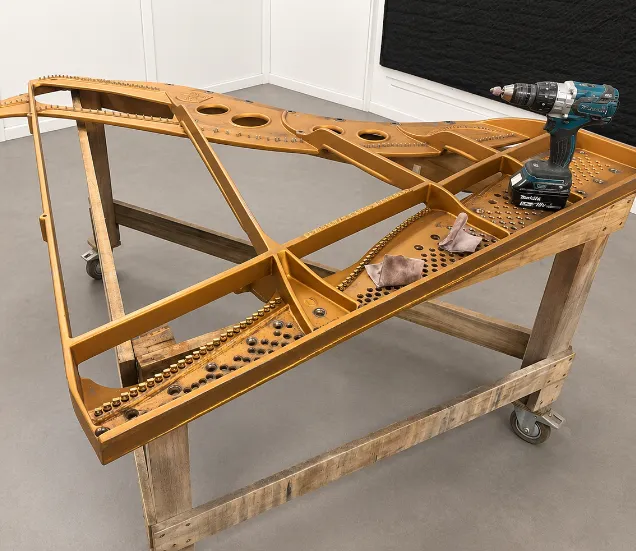
The cast-iron frame stabilises the grand piano and helps support the enormous tension exerted by the strings. Once removed, it is inspected for damage and deformation, and the condition of the mounting points is checked. It is then cleaned and refinished, for example by sanding, bronzing or lacquering. Inscriptions, decorative lines and logos are also carefully restored.
When the old strings have lost their elasticity, tonal purity or reliability, the grand piano receives a completely new set of strings. Steel strings are used for the middle and treble registers, while the bass strings consist of a steel core wound with copper and are made to measure.
New tuning pins are positioned precisely in the pinblock. The string tension is then built up gradually, allowing the case, soundboard, bridges and frame to settle in a controlled manner.
7. Restoration of the keyboard
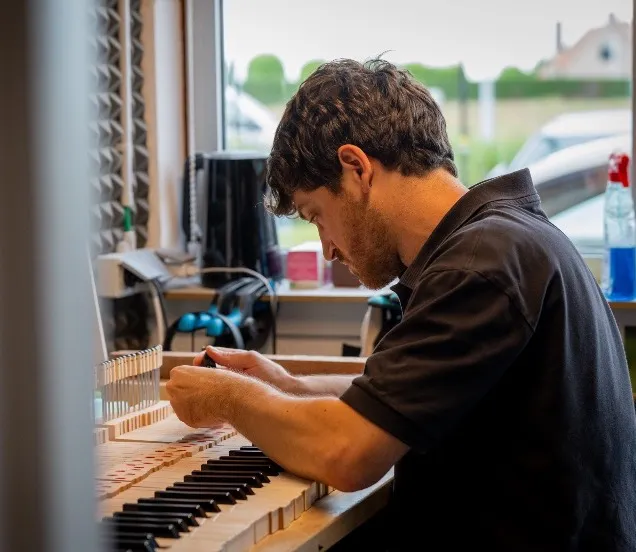
The keyboard forms the direct connection between the pianist and the instrument. Every irregularity can be felt. That is why each key is inspected individually for excessive play, friction, deformation and wear.
The keys are cleaned and restored where necessary. Worn key guides and felt or cloth bushings are replaced, allowing the keys to move smoothly again without lateral play. Damaged key coverings are restored or replaced, and the entire keyboard is precisely adjusted for height and depth. When the original keyboard is too badly damaged, deformed or worn, a completely new keyboard can be manufactured and precisely adapted to the instrument.
The weight distribution is also checked. The keyboard must not only feel even, but must also work perfectly with the new or restored action. A refined touch is not created by one individual component, but by the correct relationship between the key, leverage, action and hammer.
8. The action rebuilt
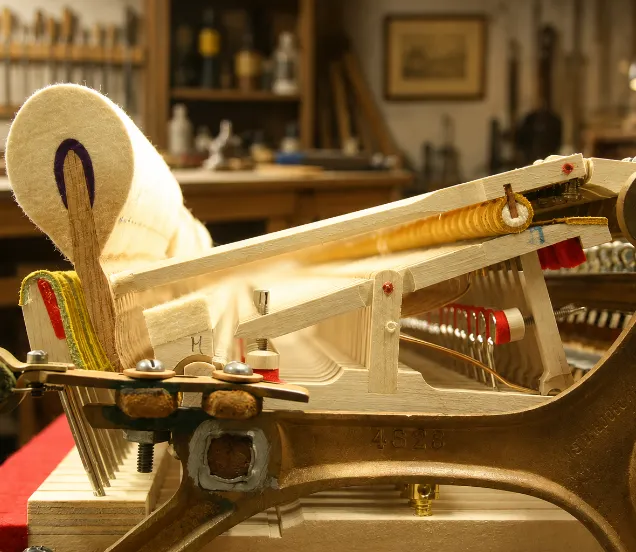
The action transfers every movement of the key to the hammer and therefore determines the speed, control and sensitivity of the touch. All components are carefully inspected. Parts that remain technically and musically sound are restored, while worn components are replaced with parts that match the instrument in terms of dimensions, weight and characteristics.
For a complete Steinway restoration, we work with genuine Steinway parts. This preserves the instrument’s original geometry, leverage and characteristic touch.
New hammer heads are carefully selected, fitted, shaped and adjusted. Their weight, position and contact with the strings must be perfectly balanced across the entire keyboard. This creates a reliable and responsive action that accurately translates the pianist’s musical intentions.
9. Dampers and pedals
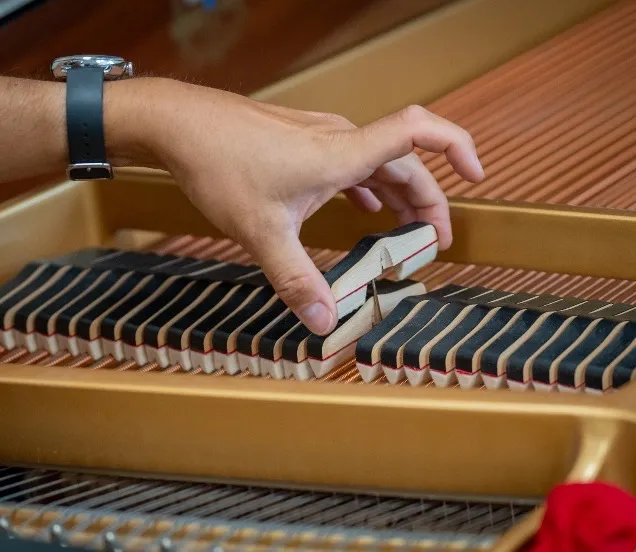
The dampers stop the strings from sounding when a key is released. Worn, hardened or deformed damper felts can cause unwanted noises, an unsettled sound or notes that continue to resonate for too long.
The dampers are restored or replaced and individually aligned with the strings. They must make even contact throughout and, when the sustain pedal is depressed, lift away from the strings simultaneously and silently.
The complete pedal mechanism is also disassembled, cleaned and rebuilt. Worn felt, leather, springs and pivot points are replaced. The sustain pedal, soft pedal and, where present, the sostenuto pedal are then adjusted with precision.
10. Restoration of the cabinet
A premium grand piano is not only a musical instrument, but also an exceptional piece of furniture. Its exterior therefore receives the same attention as its acoustic and mechanical components.
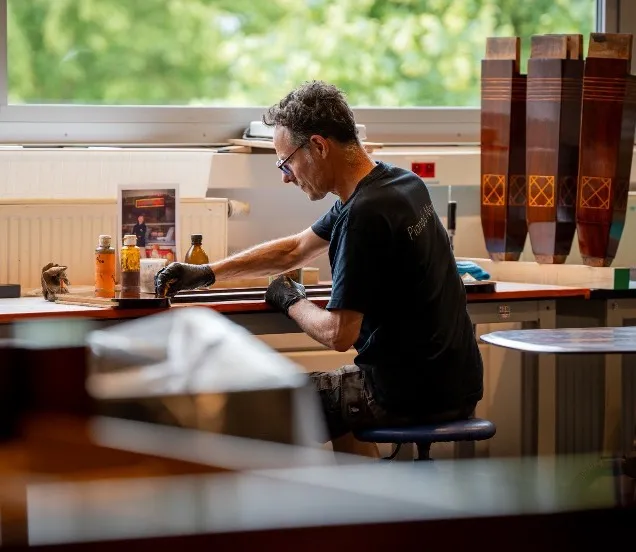
The existing finish is first assessed thoroughly. Scratches, impact damage, discolouration, loose veneer and previous repairs are carefully documented.
A black or coloured high-gloss finish can be restored and polished. Deeper damage is filled, colour-matched and levelled. When the existing lacquer can no longer be preserved, the cabinet can be completely prepared and resprayed.
Matt and satin-finished cabinets require a different approach. The wood and veneer are repaired locally, and an even sheen is carefully restored. For historical instruments, traditional techniques such as hand polishing with shellac can also be used.
11. Assembly and ultra-precise regulation
Once the structural, acoustic, mechanical and aesthetic work has been completed, the grand piano is reassembled. Every component must be adjusted to work in perfect harmony with the others.
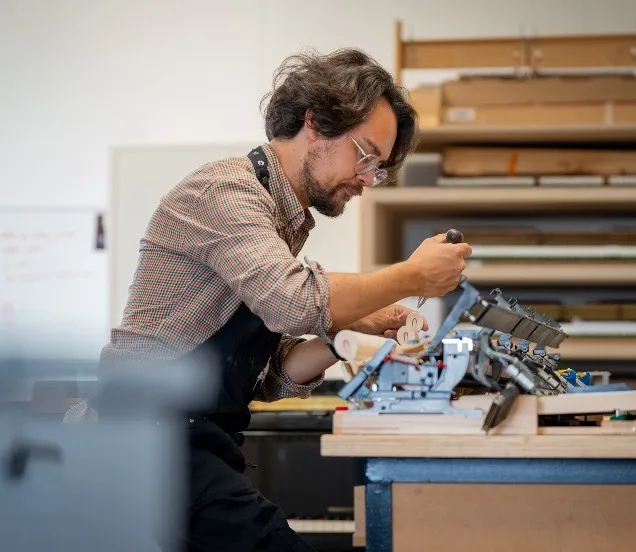
The keyboard and action undergo extensive regulation. Dozens of small distances, heights and movements are carefully adjusted. These include key dip, hammer distance, the escapement point, hammer drop and the operation of the repetition system.
These details determine how well a pianist can control soft notes, how quickly a note can be repeated and how evenly the instrument responds across the entire keyboard. Precise regulation is essential for achieving a reliable and expressive touch.
12. Tuning and voicing
After restringing, the grand piano must be tuned several times. New strings initially continue to stretch, and all components must settle under the newly applied tension. The musical finishing process therefore takes place in several stages.
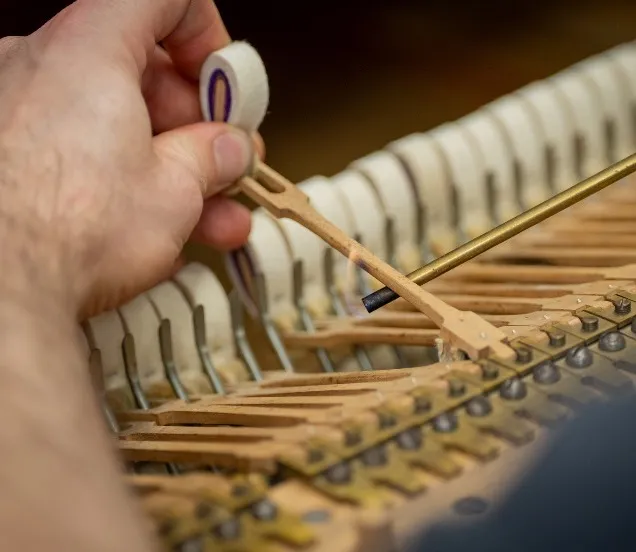
Once the tuning is sufficiently stable, the voicing process begins. This does not adjust the pitch, but refines the character of the sound. The hammer heads are shaped with precision, and the felt is treated with special needles where necessary. This allows their hardness, elasticity and contact with the strings to be carefully influenced.
Note by note, we seek a beautiful balance between warmth, clarity, power and projection. The bass should sound full without becoming heavy, the middle register should be rich and singing, and the treble should be clear without harshness. At the same time, all registers must blend naturally into one another.
Voicing is not a purely measurable process. It requires an exceptional ear, experience and a deep understanding of the instrument’s musical character.
Craftsmanship from the Chris Maene Workshop
A complete restoration at Piano’s Maene is an intensive process that brings together traditional craftsmanship, technical precision and musical sensitivity. In our own Chris Maene Workshop, experienced piano makers, restorers and expert technicians work together to examine, restore and regulate every instrument down to the smallest detail.
The history of the grand piano is not erased in the process. On the contrary, our specialists preserve the instrument’s distinctive qualities and character, while returning its technical and musical performance to the highest possible level.
In this way, a valuable Steinway, Bösendorfer, Bechstein, Blüthner or other premium grand piano once again achieves stable tuning, a rich and nuanced sound, an exceptionally precise touch and an appearance befitting its quality. The result is not an ordinary pre-owned grand piano, but an exceptional instrument that, thanks to the expertise of Piano’s Maene, is once again ready to provide many years of intensive playing pleasure, concerts and musical inspiration.
