
The piano cabinet restored to top condition
A second-hand piano should not only function perfectly from a technical perspective, but should also look well cared for and attractive. That is why, at Piano’s Maene, the entire cabinet is thoroughly assessed and professionally restored wherever necessary.
Several experienced polishers and furniture restorers work at the Chris Maene Atelier. For each piano, they determine which treatment is required: from a thorough refresh and local touch-ups to the complete refinishing of the cabinet.
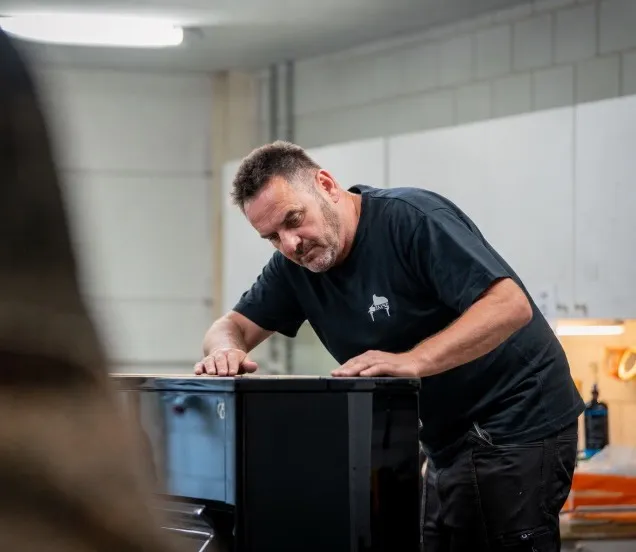
First, a thorough inspection
Every piano has a different finish and therefore requires a tailored approach. High-gloss polyester, matte lacquer, wood veneer and historic shellac finishes each require a different treatment.
Our specialists inspect, among other things:
- the condition and type of the existing finish;
- the depth of scratches and impact damage;
- possible damage to the veneer, corners and edges;
- colour variations, discolouration and dull areas;
- the original level of sheen and overall appearance of the cabinet.
Based on this assessment, we determine which treatments are required to achieve the best possible result, while preserving as much of the piano’s original character as possible.
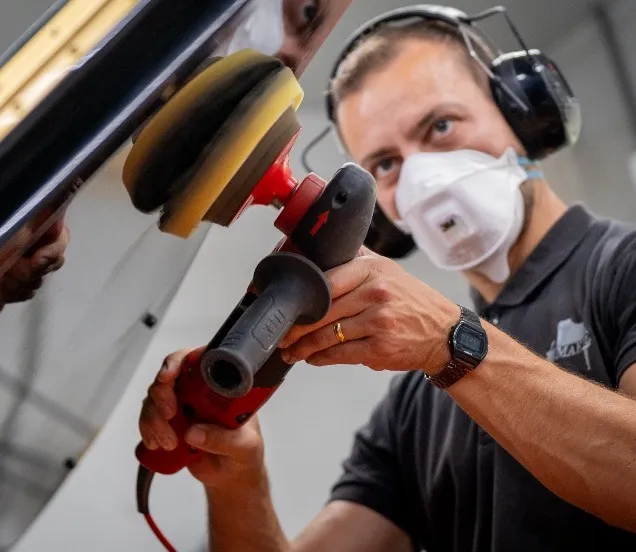
Polishing high-gloss polyester
Many modern pianos have a hard and durable polyester finish. After years of use, fine scratches, dull areas and polishing marks can reduce its deep shine.
The cabinet is first carefully cleaned. The lacquer is then inspected under focused lighting and polished in several stages. Specially selected polishing compounds are used to refine minor surface imperfections, allowing the light to be reflected evenly once again.
The result is not a temporary layer of shine, but a genuine correction of the existing lacquer surface. The piano regains the deep, mirror-like appearance associated with a high-gloss finish.
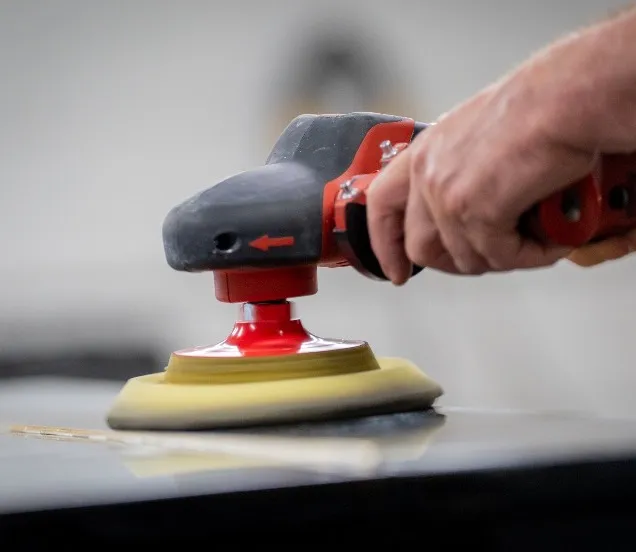
Repairing scratches and damage
Not every type of damage can be removed through polishing alone. Deeper scratches, dents and small chips in the lacquer are first carefully repaired.
Loose pieces of lacquer are removed, after which the damaged area is cleaned and prepared. It is then filled using a suitable repair material. Once fully cured, the repair is sanded level and polished in several stages.
On black pianos, the exact colour shade is also matched to the existing lacquer. Cabinets with a natural wood finish require even greater precision. In addition to applying the correct colour nuances, the wood grain is carefully recreated wherever necessary.
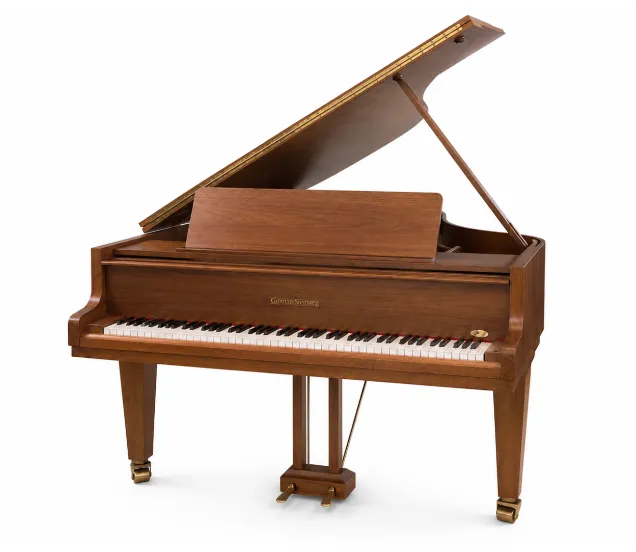
Matte or satin-finished cabinets
A matte or satin-finished piano cabinet requires a completely different approach from a high-gloss finish. These surfaces cannot simply be polished, as this could create glossy patches and visible colour variations.
Minor damage is filled and colour-matched locally. The original matte texture is then carefully recreated. Particular attention is paid to the direction of the wood grain, the fine satin lines and the existing level of sheen.
When a local repair would remain too visible, an entire panel can be refinished evenly. This ensures that the cabinet retains a calm, uniform and natural appearance.
Complete refinishing of the cabinet
Some pianos are too extensively damaged to be repaired locally. This may include deep scratches across several panels, severe discolouration, major lacquer damage or an uneven surface.
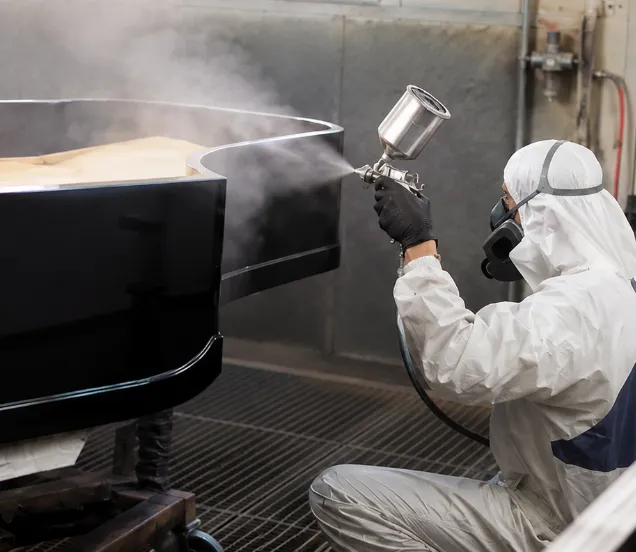
In such cases, Piano’s Maene can completely refinish the cabinet. Removable panels, hinges, logos and fittings are removed or carefully protected. Damage to the wood, veneer, corners and glued joints is then repaired, after which the entire surface is fully prepared.
The cabinet is then completely resprayed and a new layer of polyester is applied.
Once cured, the new finish is sanded completely level and polished in several stages. Only then does the surface regain its smooth, uniform and deeply lustrous appearance.
Traditional French polishing by hand
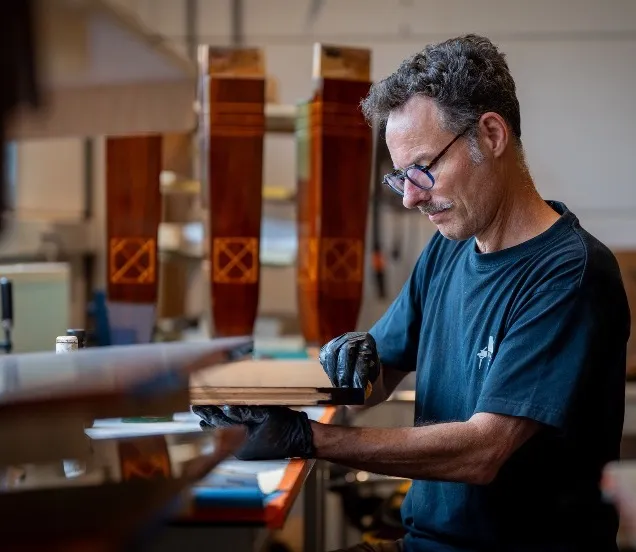
For historic and valuable instruments, a modern lacquer finish is not always appropriate. Older upright and grand pianos were often finished with shellac, applied using the traditional technique of French polishing.
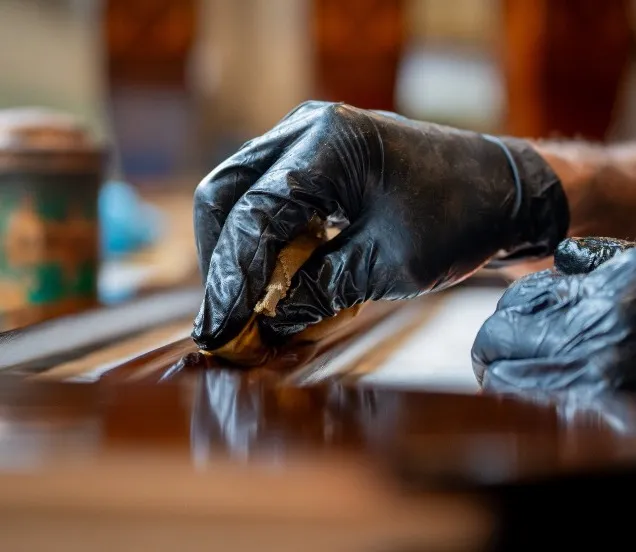
Piano’s Maene still fully masters this historic method. The shellac is dissolved in alcohol and applied to the wood with a special polishing pad in many extremely thin layers. Between the different stages, the finish is given sufficient time to dry and harden further.
Layer by layer, a warm, deep and refined lustre is created, beautifully enhancing the natural grain of the wood. The process is labour-intensive and requires extensive experience, but it is often the most respectful way to restore a historic cabinet.
Wherever possible, the existing finish is preserved and locally retouched. In this way, the instrument’s authentic appearance and character are retained.
Restoration with respect for the instrument
Not every second-hand piano needs to look completely new. With a recent high-gloss piano, we generally aim for the cleanest and most mirror-like result possible. On a historic instrument, however, slight signs of use and a natural patina may form an important part of its appearance and history.
That is why Piano’s Maene always opts for a tailored treatment. We take into account the age, value, type of wood, original finish and individual character of each instrument.
After the cabinet restoration, the piano is inspected under different lighting conditions. The colour, shine, flatness, edges and transitions must blend together beautifully throughout. Only then are all the components reassembled and the cabinet given a final, careful cleaning.
In this way, every second-hand piano is given a fully-fledged second life, both technically and visually.
